Search Engine Optimization (SEO): Importance, Benefits, and Why Every Website Needs It
Introduction to Search Engine Optimization
In today’s digital world, having a website is not enough to grow a business online. Your website must also be visible to people who are searching for your products, services, or information. This is where Search Engine Optimization (SEO) plays an important role.
SEO is the process of improving a website’s visibility in search engines like Google and Bing to attract relevant organic traffic. It involves optimizing website content, improving technical performance, building quality backlinks, and creating a better user experience.
Whether you run a small business, an e-commerce store, a personal blog, or a service-based company, SEO can help you reach your target audience and establish a strong online presence.
In this blog, we will explore the importance of SEO, its major benefits, and why every website should implement an effective SEO strategy.
What Is Search Engine Optimization (SEO)?
Search Engine Optimization, commonly known as SEO, is a digital marketing strategy used to improve a website’s rankings in the organic search results of search engines.
When users search for information using keywords such as “best digital marketing services” or “affordable website design,” search engines try to display the most relevant and useful results.
SEO helps search engines understand your website and helps users discover your content.
SEO is generally divided into three major categories:
1. On-Page SEO
On-page SEO focuses on optimizing individual web pages. It includes keyword research, title tags, meta descriptions, headings, internal links, image alt text, and high-quality content.
2. Off-Page SEO
Off-page SEO involves activities outside your website that can improve its reputation and authority. Examples include earning quality backlinks, digital PR, brand mentions, and building relationships within your industry.
3. Technical SEO
Technical SEO improves the technical foundation of a website. It includes improving page speed, mobile usability, website security, crawlability, indexing, and structured data where appropriate.
All three areas work together to support a strong SEO strategy.
Why Is SEO Important for a Website?
SEO is important because most online journeys begin with people searching for information, products, or services. If your website does not appear for relevant searches, potential customers may discover your competitors instead.
Here are some major reasons why SEO matters.
1. Increases Website Visibility
One of the primary goals of SEO is to help your website appear in relevant search results. Better visibility gives potential customers more opportunities to discover your business when they need your products or services.
For example, if you offer digital marketing services, optimizing your website for relevant searches can help interested business owners find your services online.
2. Attracts Organic Traffic
Organic traffic refers to visitors who reach your website through unpaid search results.
Unlike paid advertising, organic search traffic does not require paying for every click. However, SEO requires investment in time, content, tools, and sometimes professional services.
A well-optimized website can continue attracting relevant visitors over time, making SEO a valuable long-term marketing strategy.
3. Builds Trust and Credibility
Users often perceive websites that appear prominently in search results as relevant to their queries. High-quality content, secure browsing, clear contact information, positive reviews where applicable, and a professional website experience can strengthen credibility.
SEO helps businesses build a more trustworthy online presence by making their information useful, accessible, and easy to find.
4. Improves User Experience
SEO is not only about search engine rankings. It also focuses on making websites easier to use.
A good SEO strategy encourages businesses to improve website speed, navigation, mobile responsiveness, content readability, and internal linking.
When visitors can quickly find the information they need, they are more likely to engage with the website and take meaningful actions.
5. Generates Quality Leads
SEO helps attract people who are actively searching for products or services related to your business.
For example, someone searching for “hire a freelance SEO expert” may have a stronger intention to purchase a service than someone casually browsing digital marketing topics.
By targeting relevant search intent, businesses can attract more qualified visitors and potential leads.
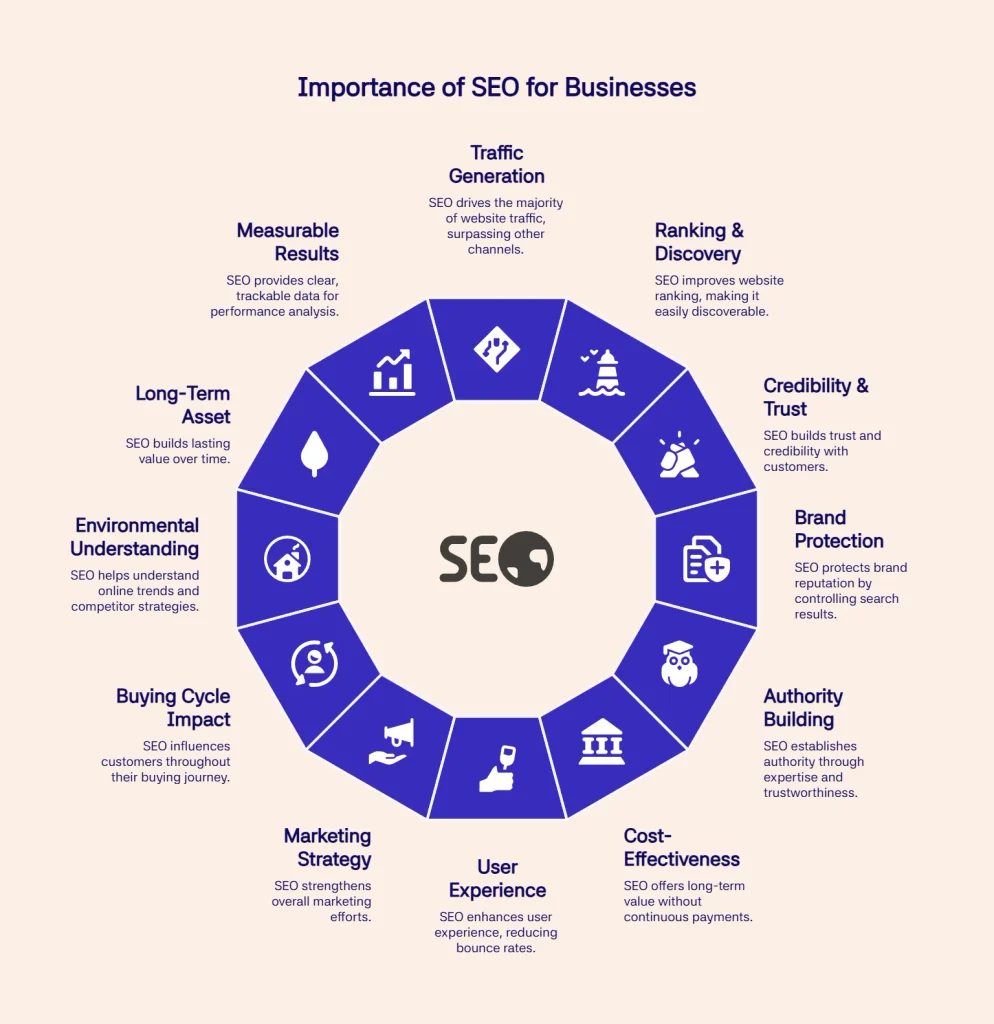
Top 10 Benefits of SEO for Businesses
1. Cost-Effective Digital Marketing
SEO can be a cost-effective marketing channel over the long term. Although it requires consistent effort and resources, organic search traffic does not involve a direct charge for every click.
For small businesses and freelancers with limited advertising budgets, SEO can help build sustainable online visibility.
2. Long-Term Results
Paid advertising typically stops generating paid traffic when the campaign ends. SEO improvements, however, may continue delivering value after the initial work is completed.
Strong content, relevant backlinks, and technical improvements can support long-term performance, although rankings and traffic can change over time.
3. Better Brand Awareness
Appearing in search results for relevant industry topics helps more people become familiar with your business.
Even when users do not immediately click your website, repeated exposure to your brand can increase recognition over time.
4. Higher Conversion Opportunities
SEO can bring visitors who are already interested in your products, services, or information.
When your content matches their needs and includes clear calls to action, such as “Request a Free Consultation” or “Contact Us Today,” you can create more opportunities for inquiries, bookings, and sales.
However, rankings and traffic alone do not guarantee conversions.
5. Competitive Advantage
If your competitors are investing in SEO and your website is not optimized, they may capture valuable search traffic that could otherwise reach your business.
A consistent SEO strategy helps you compete for relevant keywords, publish useful content, and identify opportunities your competitors may have overlooked.
6. Supports Local Business Growth
Local SEO helps businesses appear in relevant location-based searches.
For example, a digital marketing freelancer serving Delhi can optimize their website and Google Business Profile, if eligible, to improve their chances of being discovered by relevant local customers.
Important local SEO activities include maintaining accurate business information, collecting genuine customer reviews, and creating useful location-specific content.
7. Improves Website Engagement
Relevant content and intuitive navigation help visitors find answers more easily.
Although SEO does not automatically guarantee lower bounce rates or longer visits, aligning your content with user intent can encourage visitors to explore relevant pages and engage with your business.
8. Provides Measurable Results
SEO performance can be monitored using tools such as Google Search Console and Google Analytics.
You can measure impressions, clicks, search queries, organic traffic, leads, and conversions. These insights help you understand which pages perform well and where improvements are needed.
9. Supports Content Marketing
SEO and content marketing work together. Blog posts, service pages, guides, case studies, and FAQs can answer customer questions while targeting relevant search queries.
For example, a digital marketing website can publish articles about keyword research, social media marketing, Google Ads, and website optimization to attract visitors interested in these services.
10. Helps Businesses Grow Online
By improving visibility, attracting relevant traffic, and supporting lead generation, SEO can contribute to business growth.
It helps businesses build a digital presence that can work alongside social media marketing, email marketing, paid advertising, and other marketing channels.
Why Should SEO Be Done on Every Website?
Every website has a purpose. Some websites sell products, others generate leads, share knowledge, showcase portfolios, or provide information.
SEO helps search engines understand that purpose and connect the website with relevant users.
Here are some practical reasons to implement SEO on your website:
- To make your website discoverable: Help search engines find and understand important pages.
- To reach your target audience: Create content around the topics and services your customers are searching for.
- To improve website performance: Identify technical issues that affect crawling, indexing, and usability.
- To increase business opportunities: Attract relevant visitors who may become customers.
- To build online authority: Publish reliable, useful content that demonstrates your knowledge.
- To stay competitive: Keep improving your website as customer needs and search results evolve.
Without SEO, a website may still receive traffic through referrals, social media, direct visits, or paid advertising. However, it can miss valuable opportunities to attract people through organic search.
Essential SEO Practices Every Website Should Follow
To get started with SEO, focus on these important practices:
1. Conduct Keyword Research: Identify relevant search terms and understand what users expect when they search for them.
2. Create Helpful Content: Publish original, accurate, well-structured content that genuinely answers users’ questions.
3. Optimize Page Titles and Meta Descriptions: Write descriptive titles and compelling summaries that accurately represent each page.
4. Use Proper Heading Structure: Organize content using clear headings and subheadings.
5. Improve Website Speed and Mobile Usability: Make your website fast, responsive, and easy to navigate across devices.
6. Fix Technical SEO Issues: Check for broken links, crawl errors, indexing problems, duplicate content, and incorrect redirects.
7. Build Quality Backlinks: Earn links from relevant, trustworthy websites through useful content and genuine industry relationships. Avoid spammy link-building tactics.
8. Optimize Images: Use descriptive file names, appropriate image sizes, and meaningful alt text for informative images.
9. Strengthen Internal Linking: Connect related pages to help users and search engines discover important content.
10. Monitor SEO Performance: Use Google Search Console and analytics tools to evaluate results and identify areas for improvement.
How Long Does SEO Take to Show Results?
SEO is a long-term strategy, not an instant solution. Results depend on your website’s current condition, competition, industry, content quality, technical issues, and the effort invested.
Some improvements may be noticed relatively quickly, while meaningful changes in rankings, organic traffic, and conversions often take several months. There is no guaranteed timeline or fixed ranking position.
Consistent optimization, useful content, and regular performance analysis are essential for sustainable progress.
Conclusion
Search Engine Optimization is an important part of digital marketing because it helps websites improve organic visibility, attract relevant visitors, build credibility, and create opportunities for business growth.
From keyword research and on-page optimization to technical SEO and quality content creation, every part of an SEO strategy contributes to making a website more accessible and useful to its target audience.
Whether you are a freelancer, startup, small business owner, blogger, or established company, investing in SEO can help you build a stronger online presence and compete more effectively in the digital marketplace.
Want to improve your website’s visibility on Google? Start with a website SEO audit, identify your biggest opportunities, and build a strategy around your business goals.
If you need professional help with keyword research, on-page SEO, technical optimization, or content strategy, working with a digital marketing freelancer can help you develop a structured approach to improving your website’s organic performance.
Take the first step toward better search visibility today!