Pay-Per-Click (PPC) Advertising: Benefits, Importance, and Why Your Business Needs It
Introduction to Pay-Per-Click Advertising
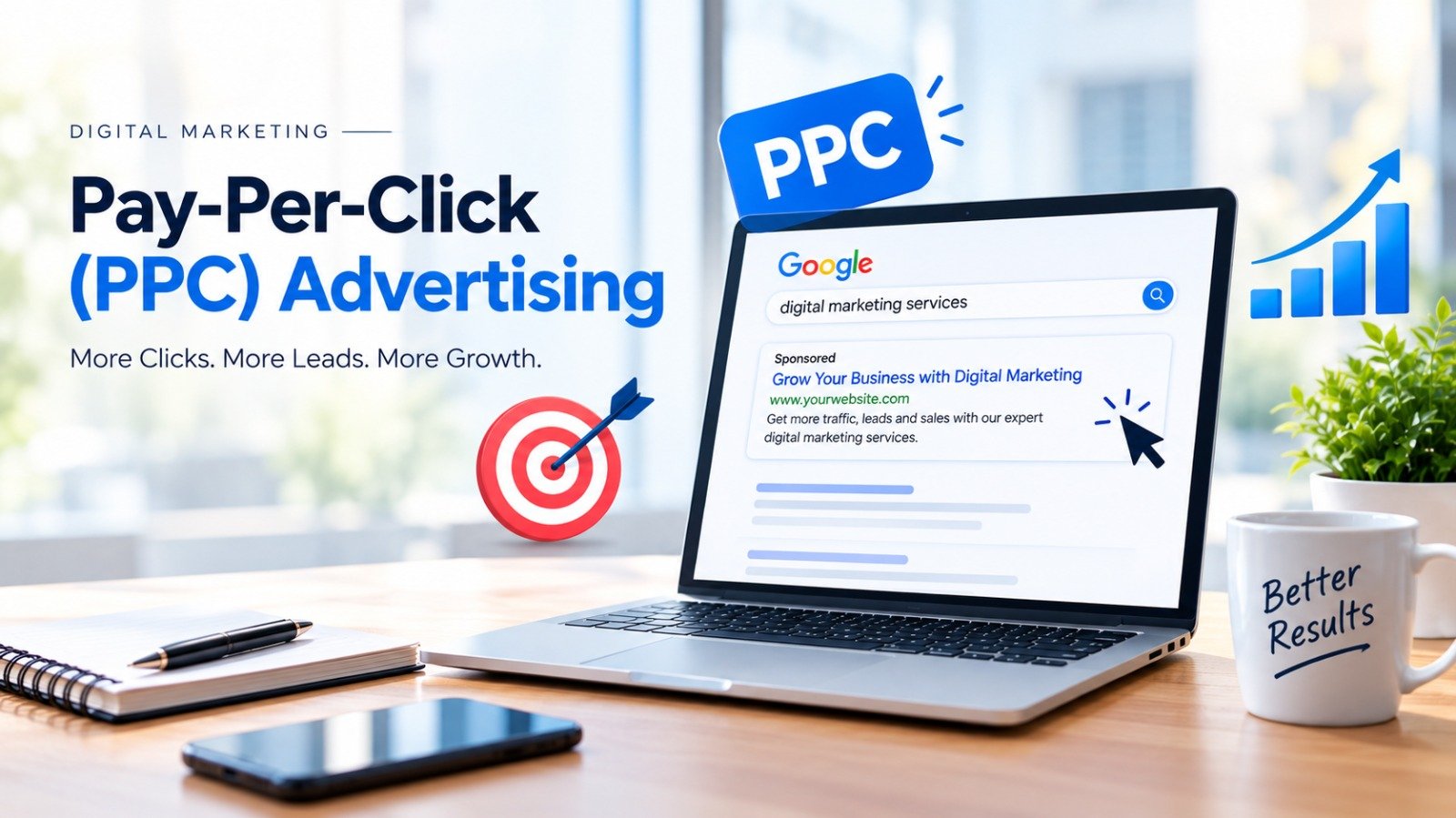
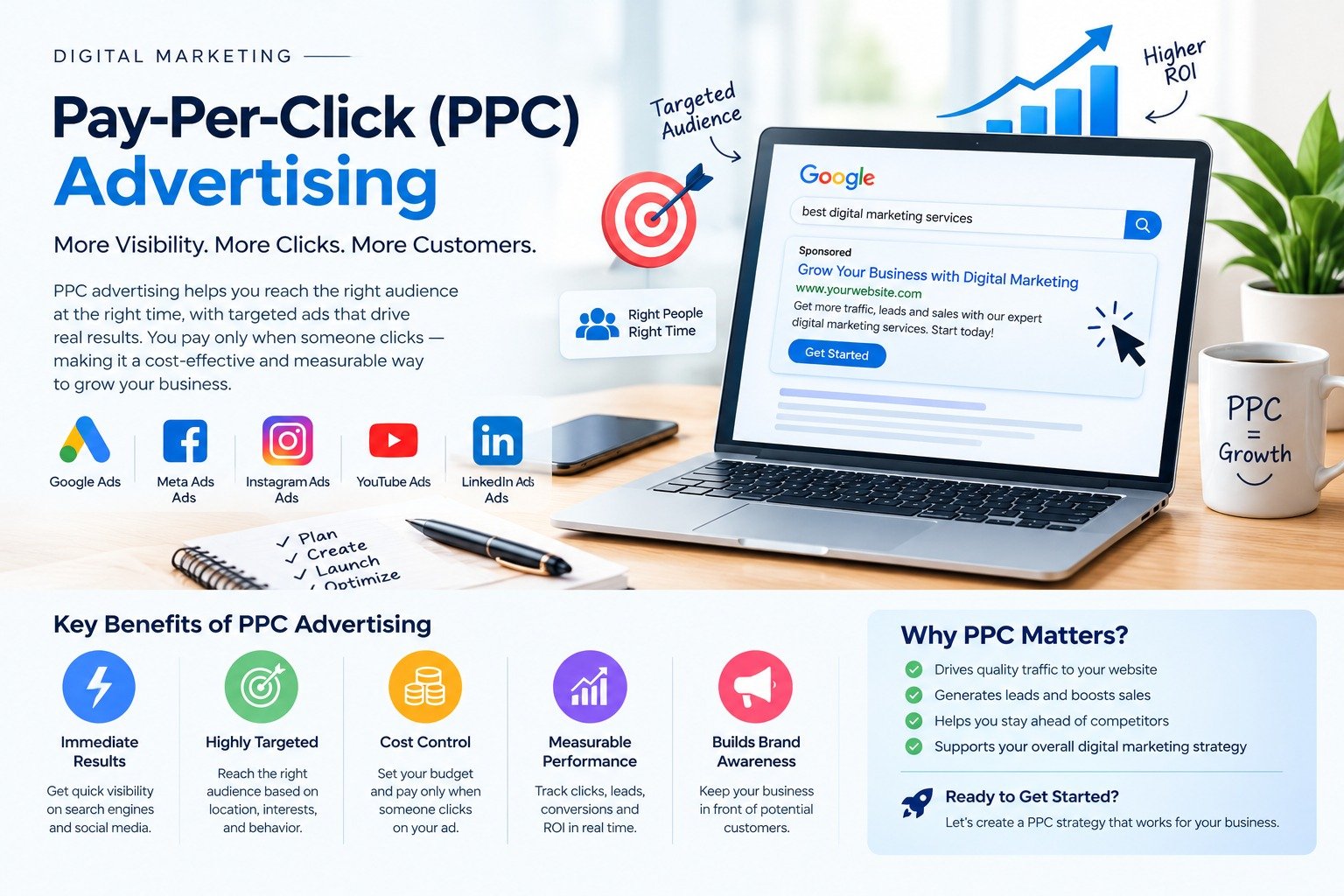
In today’s competitive digital world, businesses need effective strategies to reach their target audience, generate leads, and increase sales. One of the most powerful digital marketing strategies is Pay-Per-Click (PPC) advertising. It allows businesses to display ads on search engines, websites, and social media platforms and pay when someone clicks on their advertisement.
PPC advertising is widely used by businesses of all sizes because it can deliver targeted traffic, measurable results, and faster visibility than many organic marketing methods. Platforms such as Google Ads, Microsoft Advertising, and social media advertising networks help businesses connect with potential customers when they are searching for products or services.
Whether you run a small business, an e-commerce store, or a service-based company, PPC advertising can help you achieve your marketing goals when planned and managed correctly.
In this blog, we will explore what PPC advertising is, its importance, its major benefits, and why your business should invest in a well-planned PPC campaign.
What Is Pay-Per-Click (PPC) Advertising?
Pay-Per-Click advertising is an online advertising model in which advertisers generally pay a fee each time someone clicks on their ad. Instead of waiting for customers to discover a website organically, businesses can pay to display advertisements to relevant audiences.
For example, if you offer digital marketing services and someone searches for “best digital marketing freelancer,” your Google ad may appear among the sponsored search results. If the user clicks on your ad, you may be charged according to the advertising platform’s bidding system.
PPC advertising can be used across several platforms, including:
- Google Ads: Reach people searching for products and services on Google.
- Microsoft Advertising: Display search ads across Microsoft’s advertising network.
- Facebook and Instagram Ads: Reach audiences based on interests, demographics, and behavior.
- YouTube Ads: Promote your business through video advertisements.
- LinkedIn Ads: Target professionals and businesses for B2B marketing.
The right platform depends on your business objectives, target audience, and advertising budget.
Why Is PPC Advertising Important for Businesses?
PPC advertising is important because it helps businesses reach potential customers at the right time with relevant messages. Instead of relying only on organic traffic, companies can actively promote their offerings and compete for visibility in online search results.
Here are some reasons why PPC advertising matters:
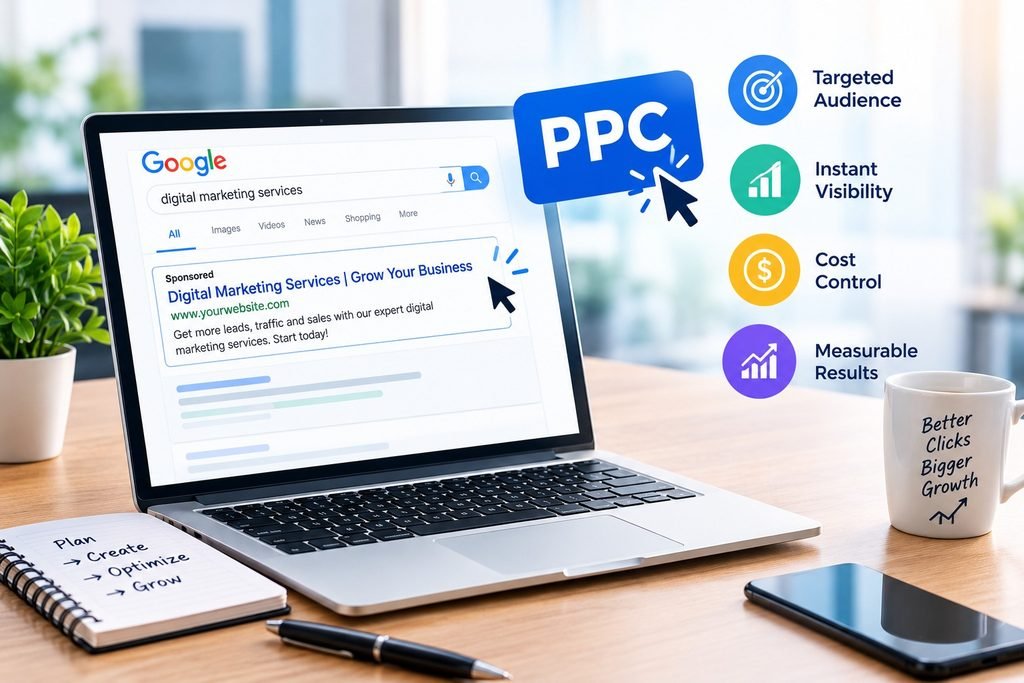
1. Immediate Online Visibility
Ranking organically on search engines can take time. PPC ads can help your business appear in sponsored search results soon after your campaign is approved and activated.
This makes PPC useful for new businesses, product launches, seasonal promotions, and time-sensitive offers.
2. Reaching the Right Audience
PPC platforms provide targeting options that help advertisers reach specific groups of people. Depending on the platform, you can target audiences by location, search intent, interests, demographics, and other available signals.
This improves the chances of connecting with people who are more likely to be interested in your products or services.
3. Generating Quality Leads
PPC campaigns can attract users who are actively searching for a solution. For example, a person searching for “hire an SEO expert” may have a stronger purchase intention than someone browsing general digital marketing information.
By directing relevant users to a useful landing page, businesses can generate enquiries, calls, bookings, and sales.
4. Measuring Marketing Performance
PPC advertising provides measurable data, including impressions, clicks, click-through rate (CTR), conversions, and advertising costs. These insights help businesses understand what is working and where improvements are needed.
Top 10 Benefits of Pay-Per-Click Advertising
1. Fast Results
One of the biggest benefits of PPC advertising is speed. Once your campaign is approved, your ads may begin appearing to relevant users without waiting for long-term organic rankings.
However, getting clicks does not guarantee sales. Campaign performance depends on targeting, competition, ad quality, and the landing page experience.
2. Budget Control
PPC advertising allows you to set campaign budgets and manage bids according to your goals. You can begin with a budget that suits your business and adjust spending as you learn from campaign results.
Although budget limits help control spending, you should regularly monitor campaigns to avoid wasting money on irrelevant clicks.
3. Highly Targeted Advertising
PPC platforms offer different targeting options to help you reach your ideal customers. Search campaigns can target relevant keywords, while social media campaigns can reach audiences using available demographic, interest, and behavioral signals.
More relevant targeting can improve campaign efficiency and reduce unnecessary spending.
4. Increased Website Traffic
PPC ads can bring visitors to your website from search engines, social networks, and other advertising placements.
By targeting relevant keywords and audiences, businesses can attract people who are interested in their offerings. A clear landing page and useful content can then encourage visitors to take the next step.
5. Better Lead Generation
PPC advertising can support lead-generation campaigns for businesses such as consultants, agencies, real estate companies, educational institutions, and service providers.
You can direct visitors to contact forms, appointment pages, quote requests, or call buttons. Conversion tracking helps identify which campaigns generate valuable enquiries.
6. Improved Brand Awareness
Even when people do not click on an advertisement, seeing your business name repeatedly may increase familiarity with your brand.
Display, video, and social media campaigns can help introduce your business to new audiences and support other marketing activities.
7. Measurable Return on Investment (ROI)
PPC advertising makes it easier to compare campaign costs with the value generated by conversions.
For example, if you spend ₹10,000 on a campaign and generate ₹30,000 in revenue directly attributable to it, the campaign produces ₹20,000 in revenue above the ad spend before other business costs.
In this example, the return on ad spend (ROAS) is 3x. This is not the same as profit or ROI because product costs, service delivery, and other expenses still need to be considered.
8. Flexible and Scalable Campaigns
You can test different advertisements, keywords, audiences, and landing pages. When a campaign performs well, you may increase its budget or expand its reach. If it performs poorly, you can adjust targeting or pause it.
Scaling should be based on conversion quality and profitability rather than clicks alone.
9. Support for Local Businesses
PPC advertising can help local businesses reach potential customers in selected geographic areas.
For example, a dentist in Delhi can target relevant searches from nearby customers, while a digital marketing freelancer can advertise services to businesses in chosen cities.
Local targeting helps make advertising more relevant to the locations a business serves.
10. Supports SEO and Overall Digital Marketing
PPC and search engine optimization (SEO) serve different purposes, but they can complement each other.
SEO focuses on improving organic search visibility over time, while PPC provides paid visibility through advertising campaigns. PPC keyword data can reveal useful search terms, and insights from SEO can help inform advertising strategies.
Using both approaches can help businesses build a more balanced digital marketing strategy.
How Does PPC Advertising Work?
A typical PPC campaign follows these steps:
Step 1: Set Your Goal
Decide whether you want website traffic, leads, phone calls, product sales, or brand awareness.
Step 2: Research Keywords and Audiences
Identify relevant search terms and audiences that match your products or services. Include negative keywords where appropriate to reduce irrelevant search traffic.
Step 3: Create Your Advertisement
Write compelling headlines and descriptions that explain your offer, highlight benefits, and include a clear call to action.
Step 4: Set Your Budget and Bidding Strategy
Choose a suitable daily or campaign budget and an appropriate bidding strategy based on your objectives and available conversion data.
Step 5: Build a Relevant Landing Page
Ensure that your landing page matches the advertisement, loads efficiently, works well on mobile devices, and makes the next action easy.
Step 6: Track and Optimize Performance
Monitor clicks, conversions, cost per lead, and other relevant metrics. Test improvements regularly to make your campaigns more effective.
Why Should Your Business Invest in PPC Advertising?
PPC advertising can be valuable when your business needs targeted exposure, faster traffic, measurable lead generation, or support for a specific promotion.
It can be particularly useful when:
- You are launching a new business or website.
- You want to generate enquiries for your services.
- You need to promote a limited-time offer.
- You want to reach customers in specific locations.
- You are selling products through an e-commerce website.
- You want measurable data to improve your marketing decisions.
However, PPC is not a guaranteed source of profit. Poor keyword selection, weak landing pages, high competition, and inadequate conversion tracking can lead to wasted spending. A successful campaign requires planning, testing, and continuous optimization.
Common PPC Advertising Mistakes to Avoid
To improve your PPC results, avoid these common mistakes:
- Choosing irrelevant keywords: Target search terms related to your actual products or services.
- Ignoring negative keywords: Exclude searches that are unlikely to produce valuable customers.
- Using weak ad copy: Communicate your unique value and provide a clear call to action.
- Sending all visitors to the homepage: Use relevant landing pages for specific campaigns.
- Not tracking conversions: Measure enquiries and sales rather than relying only on clicks.
- Ignoring mobile users: Make sure your website and forms work properly on mobile devices.
- Failing to optimize campaigns: Review performance regularly and make data-driven improvements.
Avoiding these mistakes can help you use your advertising budget more efficiently.
Conclusion
Pay-Per-Click advertising is an important part of modern digital marketing. It helps businesses increase online visibility, reach targeted audiences, generate leads, promote products, and measure advertising performance.
Its major advantages include faster visibility, budget flexibility, precise targeting, measurable results, and the ability to optimize campaigns using real performance data. When combined with a relevant landing page, effective conversion tracking, and a clear marketing strategy, PPC can become a valuable channel for business growth.
However, success depends on more than simply running ads. Businesses need the right keywords, compelling ad copy, appropriate targeting, and ongoing campaign management to achieve meaningful results.
If you want to attract potential customers and grow your business online, PPC advertising may be a valuable investment when aligned with your goals and budget.
Ready to grow your business with PPC advertising?
Work with a digital marketing professional to plan, launch, and optimize advertising campaigns that focus on your business objectives. Get in touch today to explore how a tailored PPC strategy can help you reach the right audience and generate more opportunities.